


Table of Contents
Denver Water Declared Stage 1 Drought, March 2026
South Denver is in the middle of an unusually serious drought. Denver Water declared a Stage 1 drought in March 2026 after an exceptionally poor snowpack, and the utility is asking customers to reduce water use by 20%. The current restrictions limit lawn watering to two assigned days per week, with no lawn irrigation between 10 a.m. and 6 p.m.
For homeowners, the challenge is figuring out how to make the most of limited water in a residential landscape in Denver without sacrificing valuable trees, gardens and established plants.
The good news: conserving landscape water doesn’t have to mean letting everything die. It means putting water where it matters and eliminating waste.
1. Fix and fine-tune your sprinkler system
Before reducing watering time, make sure the water you’re already using is actually reaching the plants.
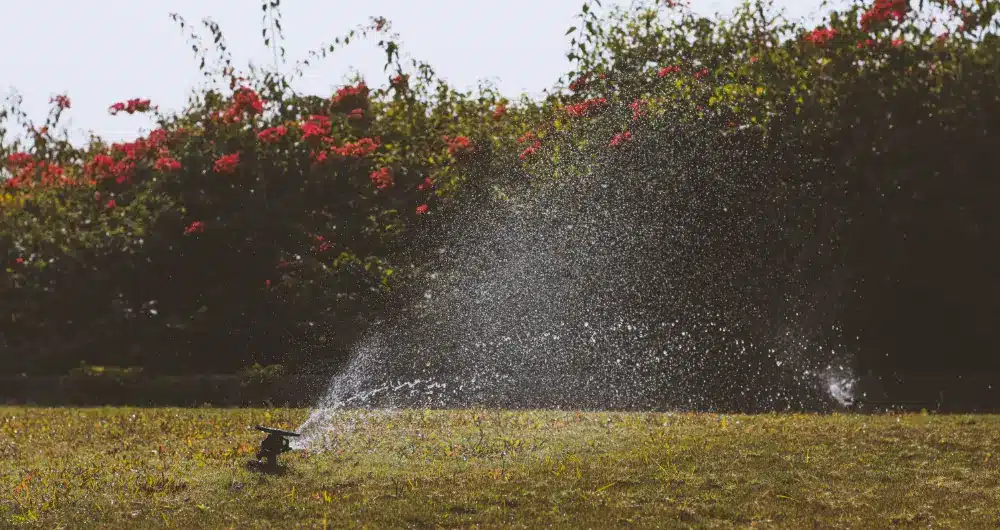
A poorly adjusted sprinkler system can waste enormous amounts of water through broken heads, leaks, overspray and runoff. Denver Water specifically requires leaking or broken sprinkler systems to be repaired within 10 days and prohibits watering sidewalks, streets and other hard surfaces. Anything Irrigation LLC can help you get your water system back online.
When managing a sprinkler system for a lawn and garden during drought, check:
- Broken, clogged or tilted sprinkler heads
- Sprinklers spraying sidewalks, driveways or streets
- Leaking valves or pipes
- Uneven coverage
- Water pooling or running off the landscape
- Zones that are watering areas that no longer contain lawn
- Controller settings that no longer match current conditions
Run each zone while you watch it. If you’re not sure what to look for, or can’t do this, contact Anything Irrigation to help you assess your system. A few minutes spent inspecting the system can reveal gallons of wasted water.


2. Use the "cycle and soak" method
Colorado’s soils, particularly clay soils common along the Front Range, don’t always absorb water quickly. Running sprinklers continuously can send water down the street instead of into the root zone.
Cycle and soak solves this problem by dividing irrigation into several shorter cycles, allowing time between cycles for water to infiltrate.
For example:
- Run a zone for 5 minutes.
- Pause long enough for the water to soak into the soil.
- Run it again for 5 minutes.
- Repeat as necessary.
Denver Water specifically recommends cycle-and-soak irrigation during drought and provides suggested run times for different sprinkler types.
Don’t automatically water simply because the irrigation controller says it’s time. Check the soil and the plants first. The goal of watering in a drought is to provide enough moisture to keep plants healthy, not to keep the soil constantly wet.

3. Give your water to the plants that need it most
When water is limited, not every plant should have equal priority. Trees deserve particular attention. They represent years or decades of growth and can suffer long-term damage from drought even when the symptoms aren’t immediately obvious. Denver Water recommends continuing to water both young and mature trees during drought.
A practical priority list is:
- Young and newly planted trees
- Established trees
- Shrubs, perennial beds and vegetable gardens
- Frequently used lawn areas
- Ornamental turf that can tolerate dormancy
A brown lawn isn’t necessarily a dead lawn. Denver Water notes that Kentucky bluegrass can survive the current two-day-per-week restrictions, although it may turn yellow or brown during prolonged heat and dryness. The grass can recover when wetter conditions return.
That makes allowing portions of your lawn to go dormant one of the simplest ways to conserve water without permanently changing the landscape.
4. Keep the water you apply in the soil
Getting water onto the landscape is only half the job. You also want to prevent it from disappearing immediately through evaporation, and for this mulch is one of the simplest tools available.
CSU Extension recommends using mulch to reduce evaporation from the soil surface, while also emphasizing efficient watering and water-wise landscape design.
Consider:
- Applying approximately 3 inches of appropriate mulch around trees and shrubs
- Keeping mulch away from tree trunks
- Removing weeds that compete for moisture
Improving soil where appropriate - Using drip or other low-volume irrigation for appropriate planting beds
- And water during the cooler parts of the day.
Under Denver Water’s current rules, lawn irrigation is prohibited between 10 a.m. and 6 p.m. Trees, shrubs and other plants may be hand-watered or irrigated with low-volume, non-spray systems outside those hours.
5. Start replacing thirsty landscape with Colorado-friendly plants
The most effective long-term strategy for making the most of limited water in a residential landscape in Denver is to reduce the amount of landscape that requires regular irrigation.
That doesn’t mean ripping out the entire yard tomorrow. In fact, during a drought, replacing large areas of established landscape can temporarily increase water demand because new plants need regular irrigation while they become established.
Instead, make gradual changes:
- Replace unnecessary lawn as it declines.
- Choose native and climate-adapted plants.
- Group plants according to their water requirements.
- Use drip irrigation where appropriate.
- Reserve turf for areas where people actually use it.
- Design planting beds around the natural conditions of the property.
Denver Water’s ColoradoScape resources provide guidance for converting portions of a traditional lawn into a more water-wise landscape. The goal isn’t a perfect lawn. It’s a resilient landscape.
During a drought this severe, homeowners may need to rethink what a “healthy” landscape looks like. A lawn that turns brown temporarily isn’t necessarily failing. A tree that survives because its water was prioritized is a success.
The most important steps are straightforward:
- Fix irrigation problems.
- Water deeply and efficiently.
- Prioritize trees and valuable plants.
- Reduce evaporation with mulch and proper timing.
- Gradually transition toward water-wise landscaping.
Denver Water’s current drought target is an overall 20% reduction in water use, with a reduced outdoor efficiency benchmark of 8 gallons per square foot of landscape annually. Every wasted gallon is a gallon that doesn’t benefit the landscape. During the current South Denver drought, smarter irrigation isn’t just good gardening. It’s good water stewardship.
Note: Water restrictions vary among South Denver-area water providers.