


Table of Contents
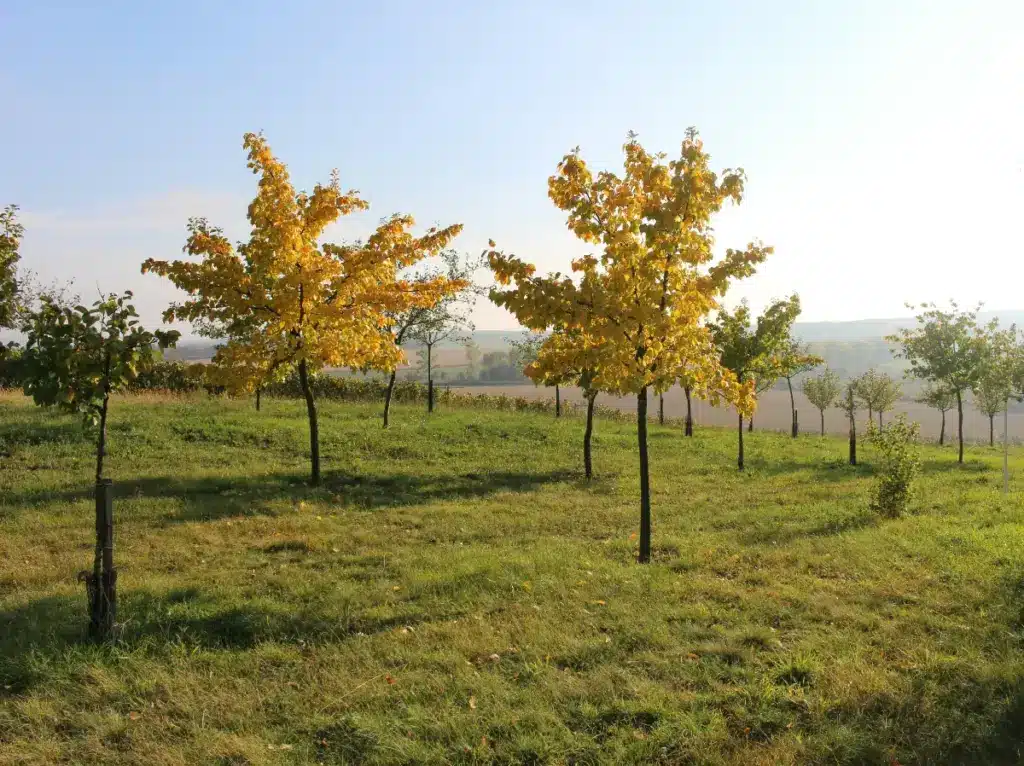
Not every plant in your Denver area landscape has the same winter watering needs.
A newly planted 1-inch tree has very different winter watering requirements from an established 20-year-old tree. Likewise a shrub planted last spring is different from one that has occupied the same spot for ten years. An evergreen on a windy southwest-facing slope may need more attention than the same species growing in a location more protected from sun and wind.
Understanding those differences can help you make better decisions about winter landscape care in Colorado.
"Newly planted" doesn't always mean "planted this year"
For shrubs, CSU Extension generally considers a shrub established after it has been planted for at least a year. Newly planted shrubs require more water during establishment and a plant’s winter watering needs.
Trees are more complicated.
CSU’s rule of thumb is that a newly transplanted tree generally takes about one year to establish for each inch of trunk diameter.
That means approximately:
1-inch tree: 1 to 1½ years
2-inch tree: 2 to 3 years
3-inch tree: 3 to 4½ years
4-inch tree: 4 to 6 years
5-inch tree: 5 to 7½ years
These are estimates, not expiration dates. Soil, climate, planting conditions and tree health all affect establishment.
A large nursery tree can therefore remain vulnerable for several years after planting.
Tree species matter, too
Some species of plants are simply more susceptible to drought injury.
CSU identifies several shallow-rooted woody plants that are particularly vulnerable during extended dry fall and winter conditions, including:
Birch
Maple
Linden
Alder
Hornbeam
Dogwood
Willow
Mountain ash
Most evergreen plants also benefit from winter watering during prolonged dry periods.
That doesn’t mean every maple has exactly the same amount of winter water needs as every other maple. It means species should be considered along with tree size, age, soil and site conditions.

Do you need help making a plan for winter watering?
Newly planted doesn't automatically mean "water it"
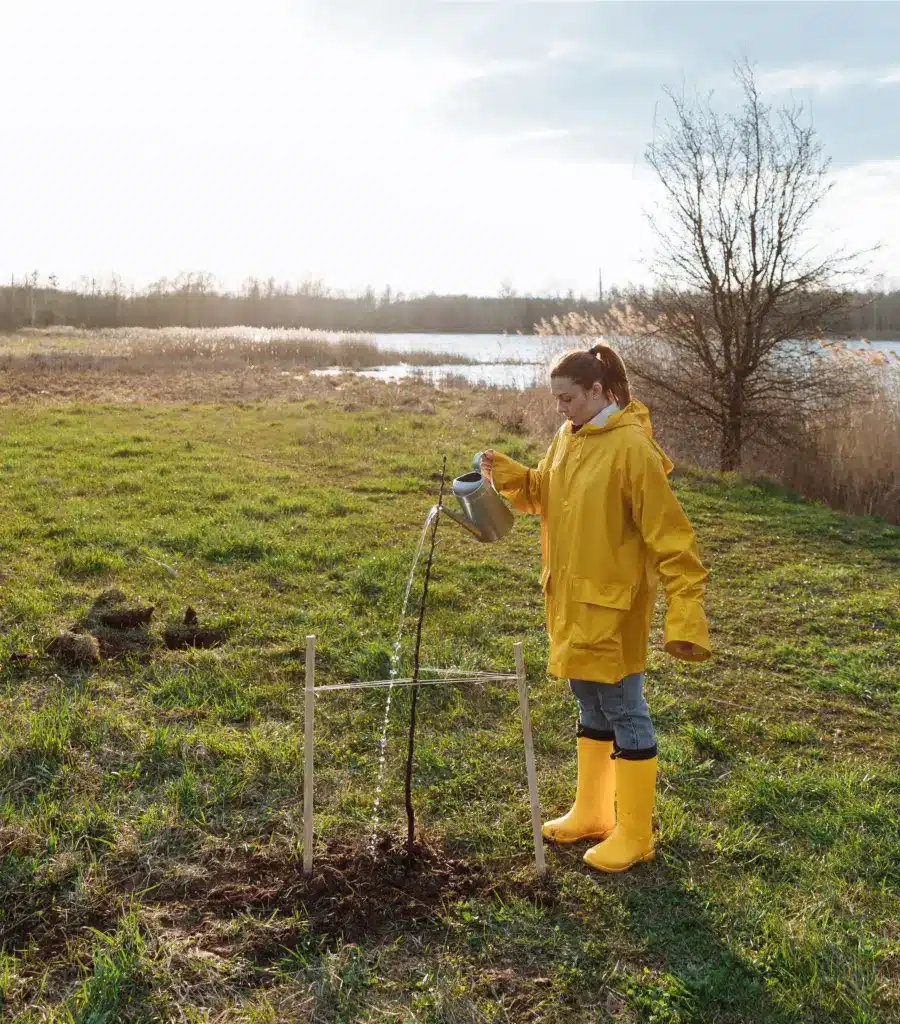
A plant should never be watered simply because it is young.
Check the soil first. CSU warns that Colorado’s clay and compacted soils can sometimes remain wet even when the surface appears dry. Overwatering can be just as damaging as underwatering, when winter watering trees.
For winter watering, the basic conditions still apply:
No snow cover
Soil is not frozen
Air and soil temperatures are above 40°F
The plant is experiencing a prolonged dry period
What makes a site "difficult"?
A difficult site is essentially a location where a plant loses moisture faster than normal or has limited access to moisture.
Watch for:
South- or west-facing exposure
Strong prevailing winds
Trees planted close to pavement
Soil compacted by construction or foot traffic
Restricted root zones
Planting areas surrounded by concrete
Soil that drains too quickly
Areas receiving reflected heat from buildings, walls or fences
Upper parts of slopes or highly exposed locations
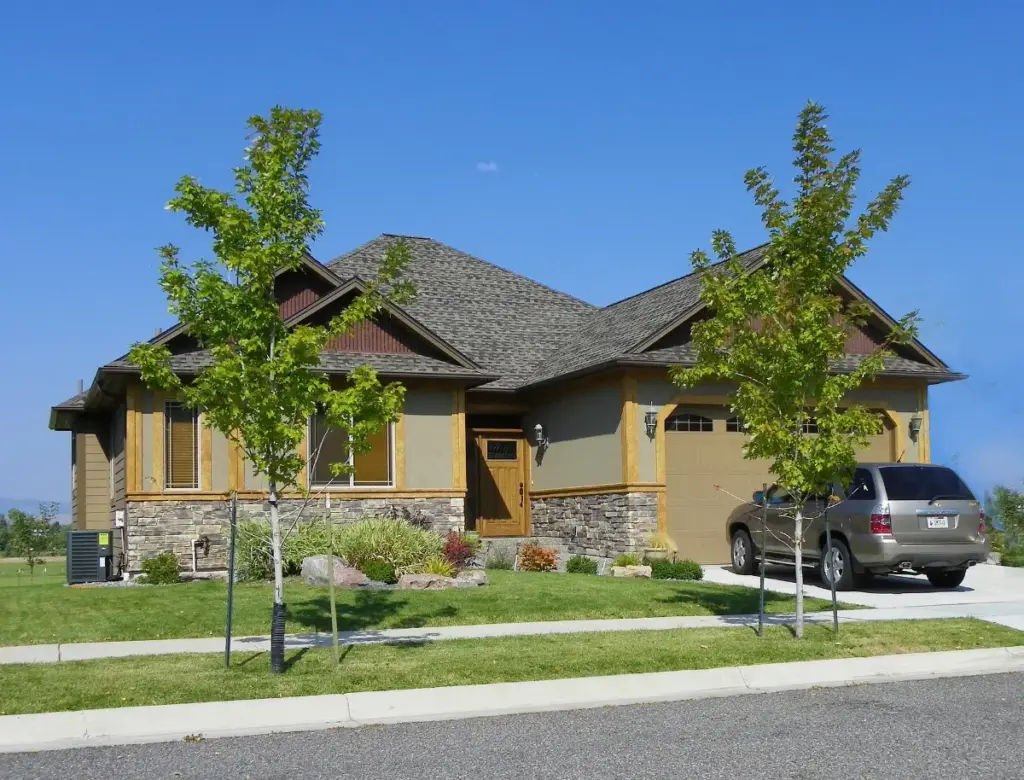
CSU notes that plants receiving reflected heat and those growing in windy or southwest-facing locations are more susceptible to winter drying. This means their winter watering needs are higher than trees in a open yard. Restricted or compromised root zones also require additional attention.
A tree growing in an open lawn may have plenty of room for roots. A tree planted in a narrow strip between a sidewalk and street has a much harder job finding water.
Shrubs have different needs
Shrubs generally establish more quickly than trees, but size still matters.
CSU’s winter guidelines give these approximate amounts during dry winters:
Newly planted shrub: 5 gallons twice per month
Established shrub under 3 feet: 5 gallons monthly
Large established shrub over 6 feet: 18 gallons monthly
These are guidelines for winter watering shrubs in dry conditions and should be reduced to account for precipitation.
Denver Water similarly recommends approximately 5 to 18 gallons for shrubs after a three-week dry spell, depending on size.
Perennials are yet another category
Unsurprisingly, perennials don’t follow the same establishment rules as trees or shrubs.
CSU notes that establishment varies with the plant and how it was planted. Bare-root plants generally take longer to establish than container-grown plants, while perennials planted late in the fall may be more vulnerable than those planted in spring. Likewise, windy and southwest-facing locations also increase winter risk.
That makes late-fall planting something to watch particularly closely.
Established trees aren't automatically maintenance-free
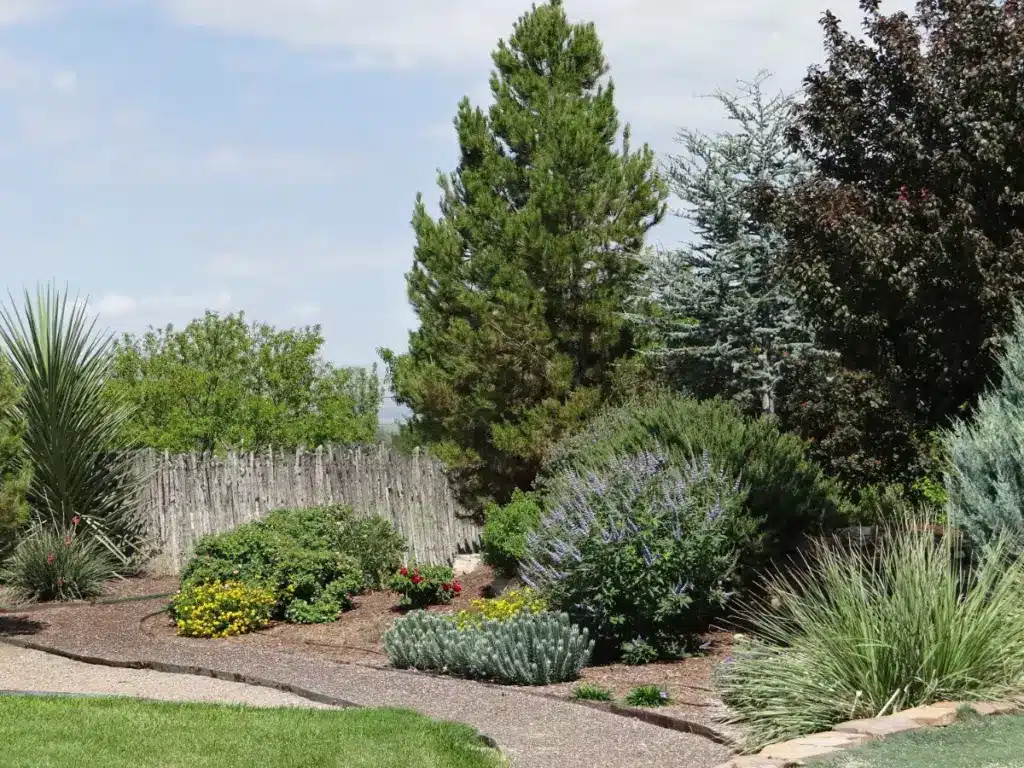
This is perhaps the most important point.
Established does not mean drought-proof.
CSU recommends supplemental winter watering for trees and woody plants during dry conditions. One CSU guideline is to consider monthly watering when natural precipitation from October through April is less than an liquid inch per month.
Denver Water recommends approximately 10 gallons per inch of trunk diameter during a three-week dry spell, with frequency depending on the tree’s size and conditions.
So even a mature tree may occasionally need help.
The takeaway
When deciding whether a landscape plant’s winter watering needs, consider five things:
Age and establishment
Tree or shrub size
Species
Site conditions
Recent precipitation and soil moisture
You don’t need to become a botanist to make good decisions. You simply need to recognize that a newly planted tree, an established shrub and a mature evergreen in an exposed location are three very different watering situations.
For general winter landscape care, see our companion article: [Winter Landscape Care in Colorado: What to Do When the Sprinklers Are Off.]
And remember: supplemental winter watering does not mean turning your winterized sprinkler system back on. Use appropriate hand-watering or permitted low-volume methods instead. Denver Water specifically and emphatically advises against operating in-ground sprinkler systems during winter.